



Even now he’s left the club, ask any Tottenham Hotspur fan about Daniel Levy and they’ll probably have a pretty strong opinion about him.
Daniel Levy was the Premier League’s longest serving executive having joined Tottenham in 2001, before departing in September 2025. In that time there were fan protests, trophy droughts, lots of commercial success and a new stadium.
Here’s a look at Daniel Levy’s relationship with Tottenham, the highs and lows, and context around his departure after 24 years.
Daniel Levy’s net worth explained
Daniel Levy was reportedly worth around £653m, as per the Sunday Times rich list in 2025.
That put him among the top 250 wealthiest individuals in the UK at the time, though Levy did not appear in the list for 2026. This was down to the 29.4% share he and his family had in ENIC, making him a minority shareholder in Tottenham.
The majority of this was said to have been sold as of June 2026, however, leaving Levy was a 4.89% stake.
When at Tottenham, Levy was paid a massive £3.58 million as a basic salary through the 2023-24 season. He also received another £3 million in bonuses, to put him top of the pile when it comes to Premier League chairmen.
Levy made his money through investment banking, private equity and business partnerships. In layman’s terms, that means he forged a career by buying businesses, making them successful, and selling them on.
That is exactly what he then did with Tottenham, forging a successful partnership with Joe Lewis and the ENIC group they formed together
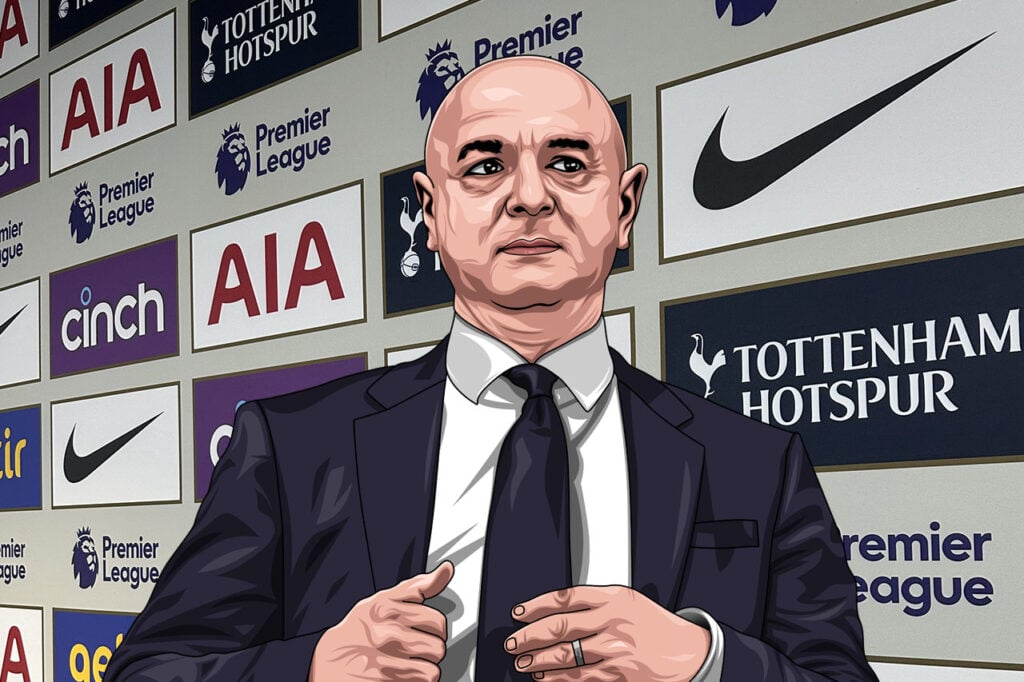
When did Daniel Levy join Tottenham and ENIC?
Levy actually partnered up with Joe Lewis and the ENIC group way back in 1995, but his association with Tottenham didn’t begin until the year 2000.
He became Managing Director of ENIC in 1995. When the group bought Tottenham Hotspur from Sir Alan Sugar in December 2000, Levy was named on the board of directors.
Levy later became chairman of the club in February 2001 and remained in the position until September 2025.
How many trophies did Tottenham win under Daniel Levy
Tottenham Hotspur won two trophies under Levy’s stewardship: The League Cup in 2008 and the Europa League in 2025.
Much had been said of Tottenham’s trophy drought since the League Cup in 2008 with Spurs having been the only club in the so-called Premier League ‘Big Six’ not to have won a trophy in the 2010s and beyond, but finally managed to get the Spursy tag off their shoulders with victory against Manchester United in Bilbao
Spurs made it to the Champions League final in 2019 under Mauricio Pochettino, but lost to Liverpool. They also made it to the Carabao Cup final in 2021, but lost to Manchester City, with Ryan Mason in temporary charge for that game.
Levy himself has been criticised for the perceived lack of backing he has offered managers over the years and for failing to strike when the proverbial iron was hot, particularly during the Pochettino era when the squad was strong and perhaps just needed a couple of top players adding to it to get to the next level.
How many managers did Spurs have during Levy’s tenure?
Tottenham Hotspur had 13 permanent managers during Levy’s time at the club, plus a further six caretaker managers temporarily in charge.
The Levy era began with Glenn Hoddle at the helm, but the Spurs legend left the role in 2003, with David Pleat taking over as caretaker, before Frenchman Jacques Santini took charge in 2004.
Santini did not last long, with Martin Jol being hired in the same year. The Dutchman lasted three years, give or take, before Clive Allen and Alex Inglethorpe become co-caretaker managers in 2007 (they would later take on the role again in 2008, briefly).
This is where things started to look up for Spurs, though. Juande Ramos came in and won the League Cup for the club, before Harry Redknapp took over in 2008 and really ushered in a new era of success for the Lilywhites.
Redknapp led Spurs to the Champions League for the first time and spent four years at the club. He was replaced by Andre Villas-Boas in 2012, who was in turn replaced by Tim Sherwood in 2013, and a year later, Mauricio Pochettino arrived at White Hart Lane.
The Argentine was hugely popular and relatively successful, too, leading the club to second-placed finishes in the Premier League and that Champions League final.
Since then, we’ve had Jose Mourinho, Nuno Espirito Santo, Antonio Conte, and caretaker spells for Ryan Mason and Cristian Stellini, followed by Ange Postecoglou.
Postecoglou was replaced in the summer of 2025 with Brentford boss, Thomas Frank, marking Levy’s final managerial appointment.
Why did Daniel Levy leave Tottenham Hotspur?
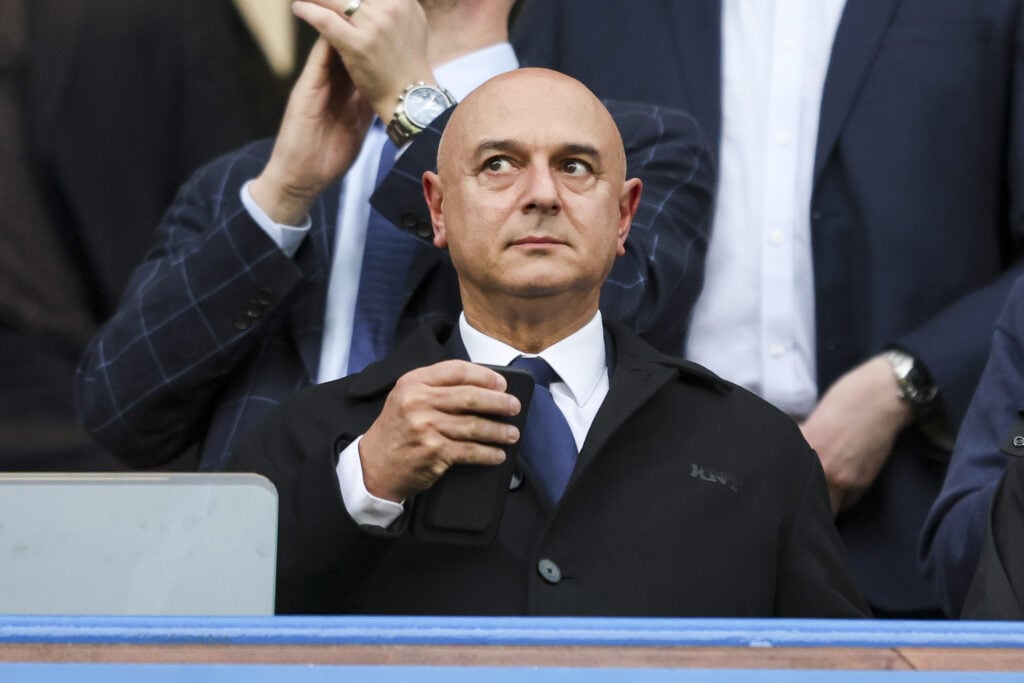
In early September 2025, it was announced that Daniel Levy was stepping down as Tottenham’s executive chairman.
Levy, reflecting on his time, spoke of how they had Tottenham into a “global heavyweight” and “built a community”.
Levy continued, “I wish to thank all the fans that have supported me over the years. It hasn’t always been an easy journey but significant progress has been made. I will continue to support this club passionately.”
The announcement was something of a bombshell, with it later transpiring Levy had been asked to resign.
This followed an internal review by Tavistock Group – ENIC’s majority shareholders. Media reports suggested that Levy was unaware he would be asked to step down until mere hours before the news became public.
Daniel Levy’s Personal information
Daniel Levy was born in Essex on February 8, 1962, making him 64-years-old at the time of writing.
His father, Barry Levy, was fairly wealthy, too, having owned the clothing company Mr Byrite (which later rebranded as Blue Inc). Daniel Levy would become involved in the family business after graduating from Sidney Sussex College, Cambridge.
Levy is a lifelong Tottenham supporter, and has been attending matches since childhood.
He is married to Tracy Dixon, his former PA, and they have four children together.
For more on the goings on behind the scenes at Tottenham, check out all you need to know about the Tottenham Hotspur Stadium or find out about some of the Spurs legends. You can also learn about players like Cristian Romero or Heung-min Son.