
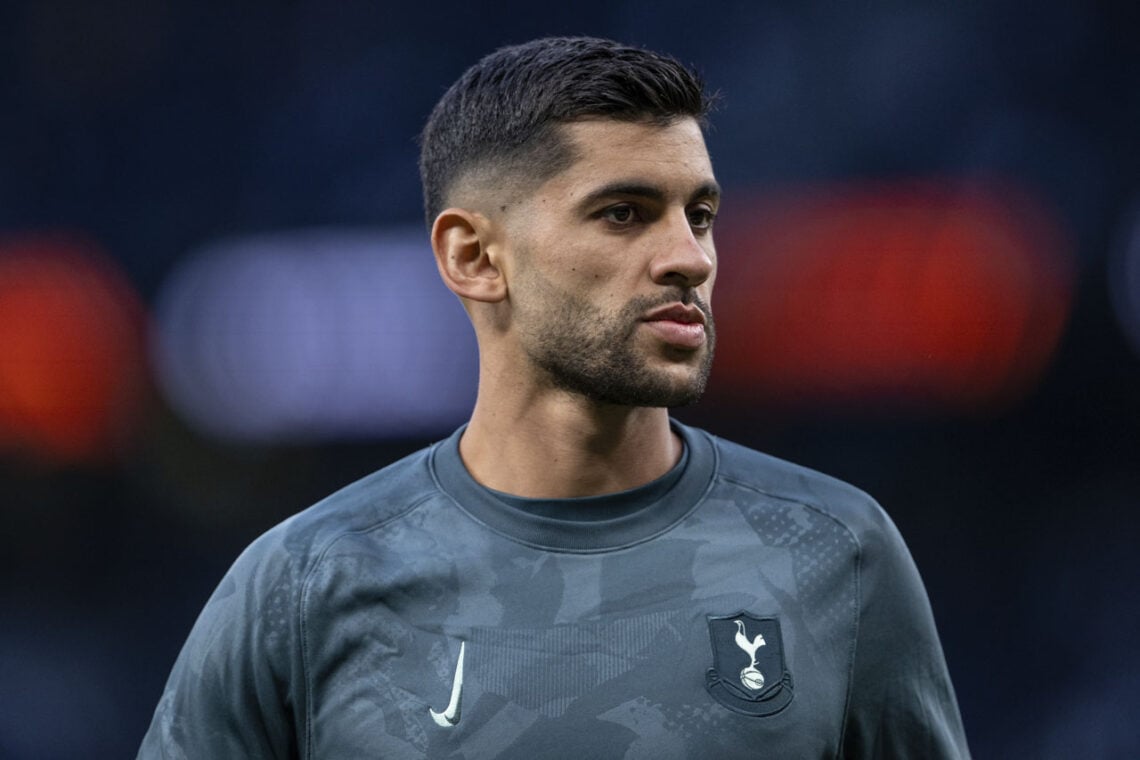


Cristian Romero’s time at Tottenham is over, ending a turbulent five-year stint which saw him play under eight different managers but also be a pivotal character in the campaign that led to Spurs ending their 17-year trophy drought.
Heung Min-Son was the player that stayed even when it was against his best interest and the captain that finally ended Spurs’ trophy drought. Hugo Lloris presided over what was probably the best Spurs side in history. Ledley King, Danny Blanchflower, Perryman, were all faithful servants of the club.
Cristian Romero, on the other hand, will forever be one of the Tottenham Hotspur captains that need at least a few paragraphs to explain their time at the club.
As Spurs say goodbye to the captain that oversaw what was probably the club’s most turbulent period in its recent history, we begin the effort of deciphering the complex legacy that Cristian Romero leaves behind.
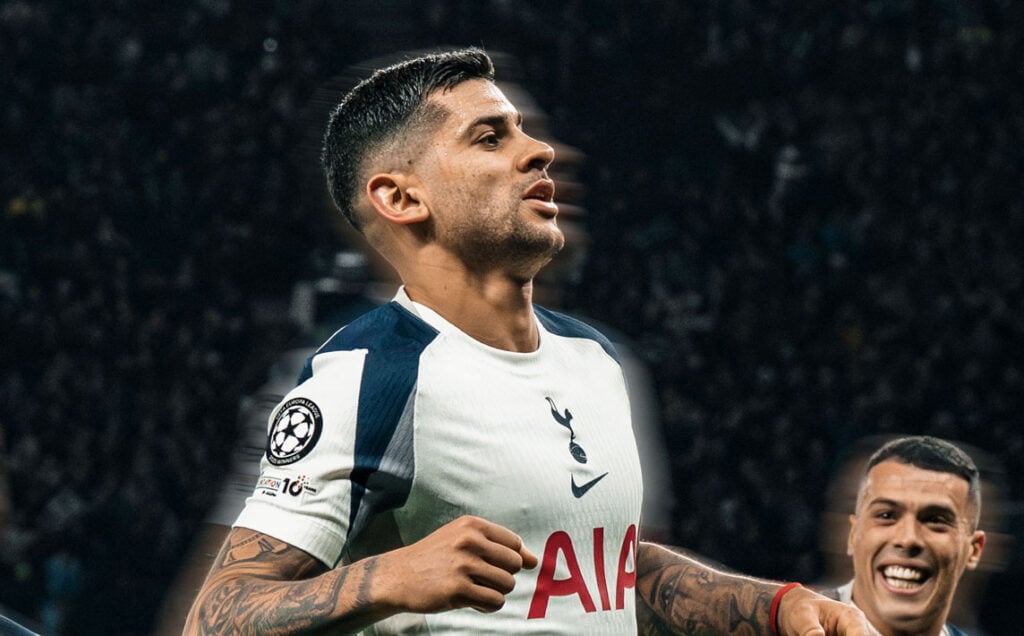
Cristian Romero: The player that Tottenham saw too rarely
On his day, Romero could have been counted amongst the best centre-backs in the world.
He had the vision to play an inch-perfect pass or long ball, the anticipation to stop an attack, the timing to put in the perfect challenge to find the perfect angle for a block. One of the select few players who know how to use their qualities to fully compensate for whatever technical or athletic weaknesses they might have, without having to rely on a system to do it for them.
And on top of a truly elite skillset, there were the emotion and energy he brought to the pitch, his leadership, intensity and respect he commanded from both his teammates and the opposition.
It’s no wonder, then, that Tottenham saw the best of Cristian Romero under Ange Postecoglou, a manager incredibly apt at getting his players emotionally invested in his projects.
Romero’s Spurs magnum opus, orchestrated by Postecoglou, was without a doubt that fateful night at San Mamés, Bilbao, leading out the team that beat Manchester United in a European final to finally end Tottenham’s 17-year trophy drought.
His man-of-the-match performance summed up by the team huddle which he took deep into Manchester United’s half, in front of Tottenham’s fans and their section of the stadium.
It’s hard to say if it was the Australian’s intelligence or just happenstance that constructed that plot to so closely mirror the narrative which took Argentina to the summit of world football in Qatar just 2 years prior.
Postecoglou managed to rally every single player and member of staff, top to bottom, behind the dream of ending Tottenham’s barren trophy streak and finally win Son Heung-Min the trophy he so deeply deserved.
Romero’s commitment to Argentina was sometimes held against him, but there’s an argument it played a part in winning Spurs that Europa League.
The devotion he shared with his national teammates to win Lionel Messi his World Cup saw him just as committed to winning a trophy for his Spurs captain, Sonny.
When Romero handed off the captain’s armband to Son Heung-Min, who came on in the 80th minute to be on the pitch when Tottenham finally ended their so-maligned trophy curse, it felt like there was simply no way for Spurs not to finish with their happy ending.
Yet, just like how Romero’s ability to ride the emotional stakes and use them for motivation was one of his strengths as a player, it also came to be his undoing.
Where it all went wrong for Cristian Romero at Tottenham
Even before the triumph in Bilbao, Romero’s frequent unavailability was often held against him during his time at Tottenham Hotspur.
Romero was prone to rash decisions; he both took and gave out challenges incredibly personally, and that often resulted in him sitting out games suspended. A patchy injury record didn’t help either.
Postecoglou managed to harness some of that aggressiveness by channelling it in a more productive direction; Romero responded really well to the extra responsibility of being in the team’s leadership group.
He seemed to take a lot of pride and care when leading the team on the pitch and also seemed to have a genuine interest in driving the club towards success.
But his ambition, especially coupled with his emotional nature, often resulted in Romero openly criticising the club’s leadership.
When news broke of Postecoglou’s sacking, Romero’s post thanked the departing manager for his time at the club, saying, among other things, that he “paved the way despite the many obstacles that always existed and will exist,” and that besides “everything [they] won a trophy and will go down in the history of this beautiful club.”
It wasn’t the first time Romero criticised the club either. He called out the lack of reinforcements in the January transfer window of that, saying that the club should be competing at the top of the table.
In hindsight, those thinly veiled jabs at the club’s decisionmakers probably should have served a warning for the board.
The arrival of Thomas Frank and the qualification for Champions League football gave everyone the chance at a clean break and to fix relations.
But despite receiving the captainship and a new, improved contract, the positive relationship between the club and Romero lasted only a few months before reverting to type.
It didn’t happen all at once, of course, as Cristian Romero’s performances pulled Spurs from the brink on a few occasions, goals at Newcastle and Burnley being notable examples.
But when the January transfer window failed to bring in the kind of reinforcements that could halt a team spiralling out of control, something changed.
As the captain, it would be Romero’s responsibility to try and bridge the growing divide between fans and the players, to hold his teammates to more rigorous standards on the training pitch, to be the calm head that keeps his team in games.
Instead, he called the lack of investment “disgraceful”; there were mistakes costing the team games, rumours of downed tools, of being late to training sessions.
And when the club was fighting for survival, Romero was doing his rehab in Argentina.
That it wasn’t instantly obvious that Cristian Romero would be attending Spurs’ final relegation-deciding fixture speaks volumes about both Romero’s attachment to the club and his standing within the fanbase.
The legacy Romero leaves behind at Spurs
Romero’s time at the club will forever be defined by that night in Bilbao and the many “ifs” and questions that always surrounded him.
If Romero was available to contribute to the team more than only sporadically, would it have been worth it to deal with the off-pitch drama?
If the environment in the club saw more stability, would Romero himself be more reliable?
If the club acted when the opportunity was there to build on the Europa League success and match Romero’s ambition, perhaps his legacy would not have been a subject of contention at all.
Now, he is another team’s problem to handle; his £35 million move to Atlético Madrid confirmed late last week.
It’ll be a while before the jury comes back with the final verdict on Cristian Romero’s time at Tottenahm.
One thing is for sure: he will “go down in the history of this beautiful club.”
The question is, when the dust settles, for what will he be remembered?