
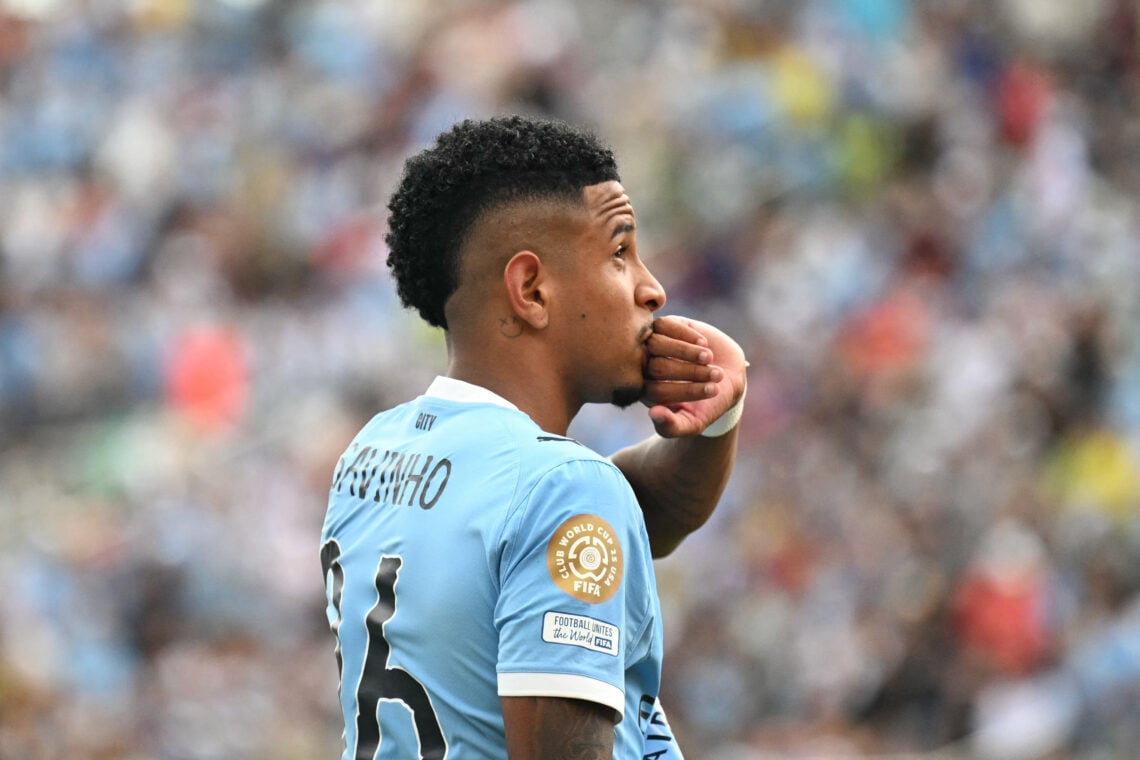


Tottenham’s summer squad rebuild continues, with deals for City winger Savinho and Brighton defender Jan Paul van Hecke reportedly getting closer. Here’s an in-depth look at what one of these targets could bring to Tottenham.
The recent announcement of Andy Robertson on a free transfer (and Marcos Senesi not far behind) means that Spurs have reinforced their defence very early on in the transfer window.
The transfer saga for Savinho has been going on since last year, with moves failing to materialise both in the 2025 summer transfer window and last season’s January window.
To better understand why Tottenham have wanted Savinho for so long, we must take a look at the current situation in their squad, its biggest problems this season, and the early semblances of a long-term footballing vision that Spurs might be developing.
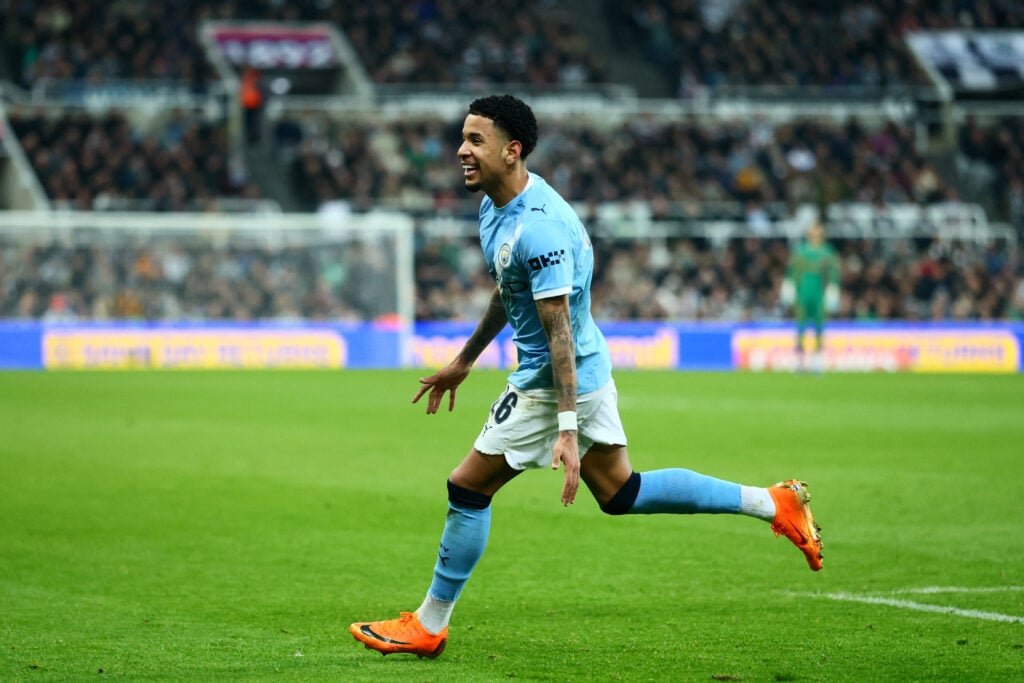
Savinho is the winger Tottenham have been begging for
It really doesn’t take a professional analyst to say that one of Spurs’ biggest downfalls last season was their almost non-existent technical floor.
With a squad gutted by season-ending injuries to their most creative players in James Maddison, Dejan Kulusevski, Mohammed Kudus, Wilson Odobert, Dominic Solanke and Xavi Simons, Spurs found themselves with a one-dimensional attacking unit that struggled to create dangerous chances in both volume and quality, especially during the second half of the season.
Playing with dysfunctional tactics under Thomas Frank and a squad diminished by injuries after his sacking, resulted in set pieces being Spurs’ most consistent way of scoring goals. They were joint first, alongside Arsenal, for most goals scored through set-pieces at 19, while at the same time holding an abysmal record of playing only 8 through balls during the entirety of the 2025/2026 season.
Based on Spurs’ additions and current transfer links to players like Van Hecke, Senesi and Savinho, it is clear that the sporting department determined that bringing in players with high technical levels is a way to address their attacking ineffectiveness.
When his teams are in possession, Roberto De Zerbi’s ideal style of football can be boiled down to as one reliant on skilful passing through lines of pressure to create sustainable attacking opportunities for the attacking players.
We saw the general principles of that attack, as raw as it may have been, during Spurs’ last few games of the season, like, for example, against Aston Villa.
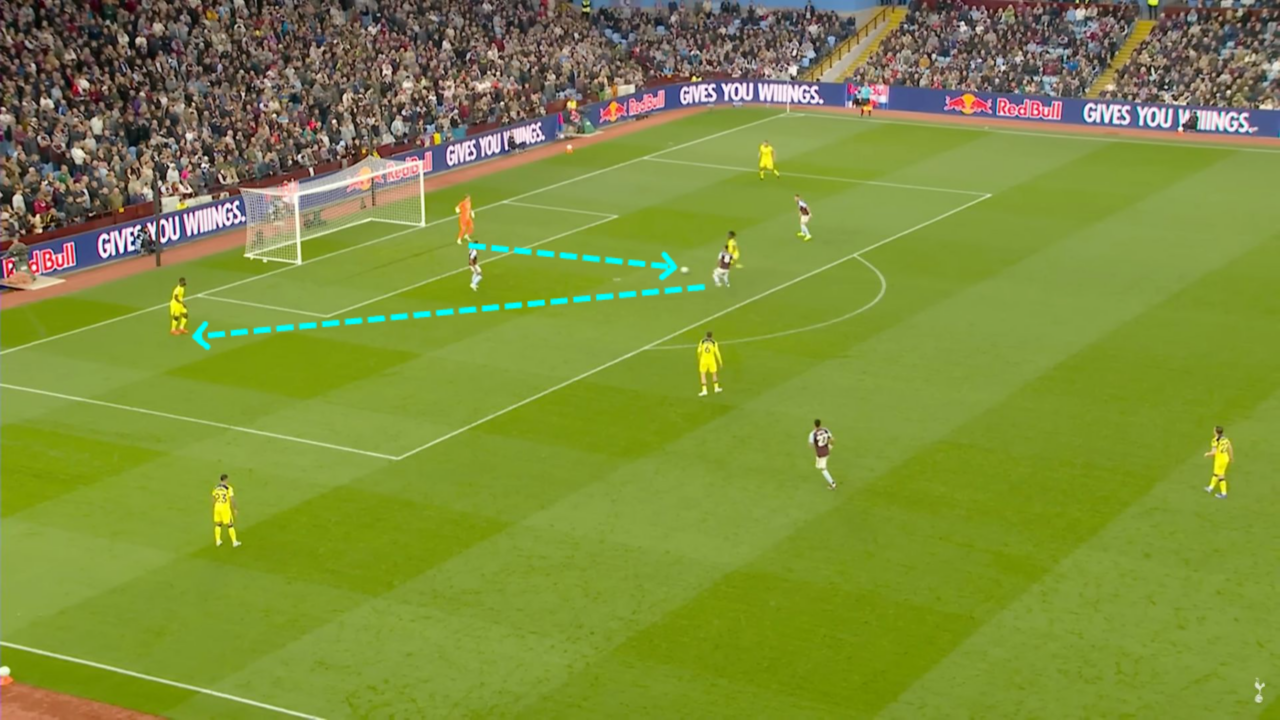
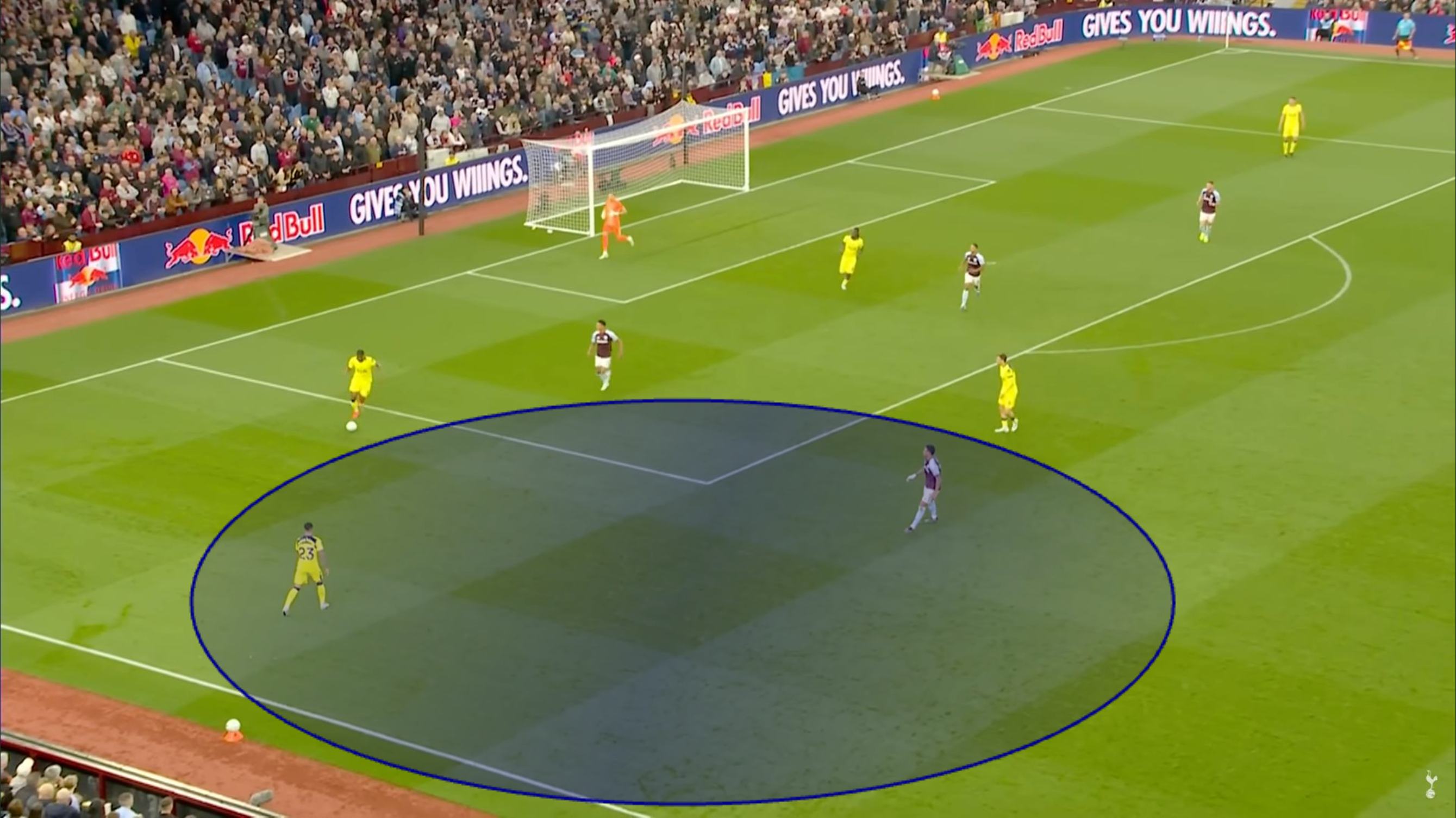
Here, we see Spurs play out of their way out of a high Villa press through brave passing and finding the spare man. Kinsky play a short pass to Udogie who’s able to find a quality pass to Kevin Danso, opening up a lot of space on the flanks.
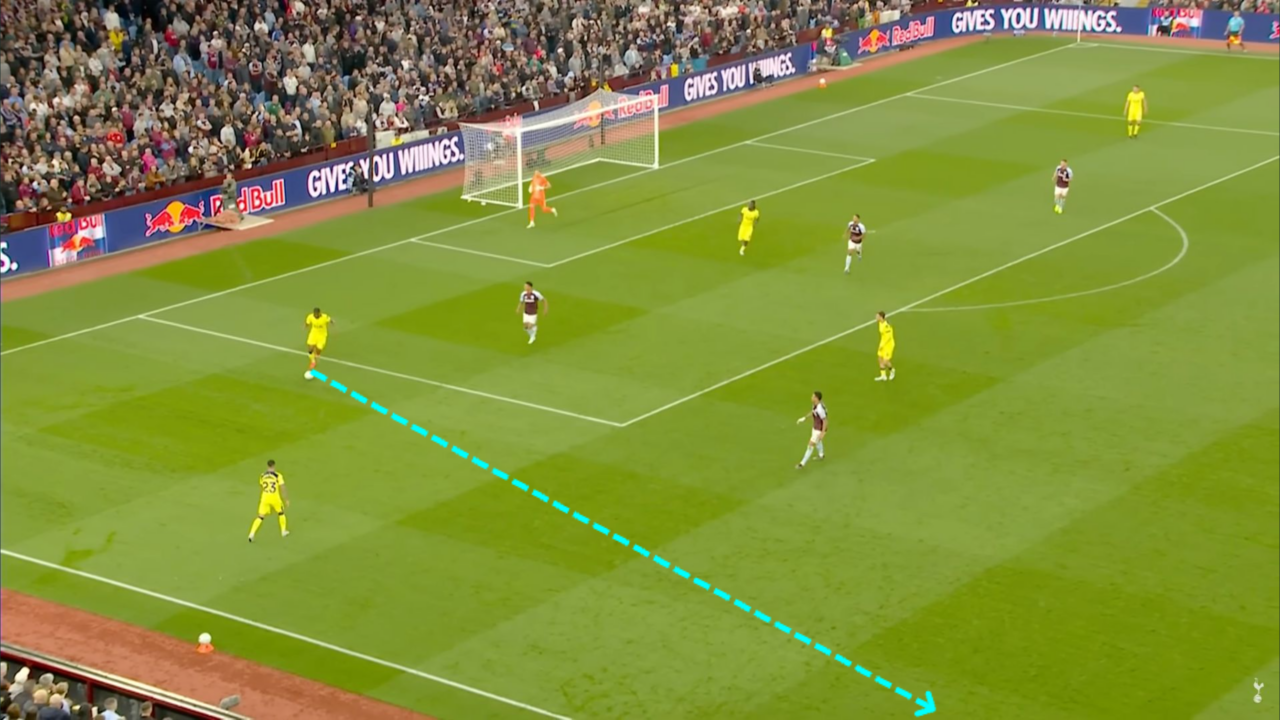
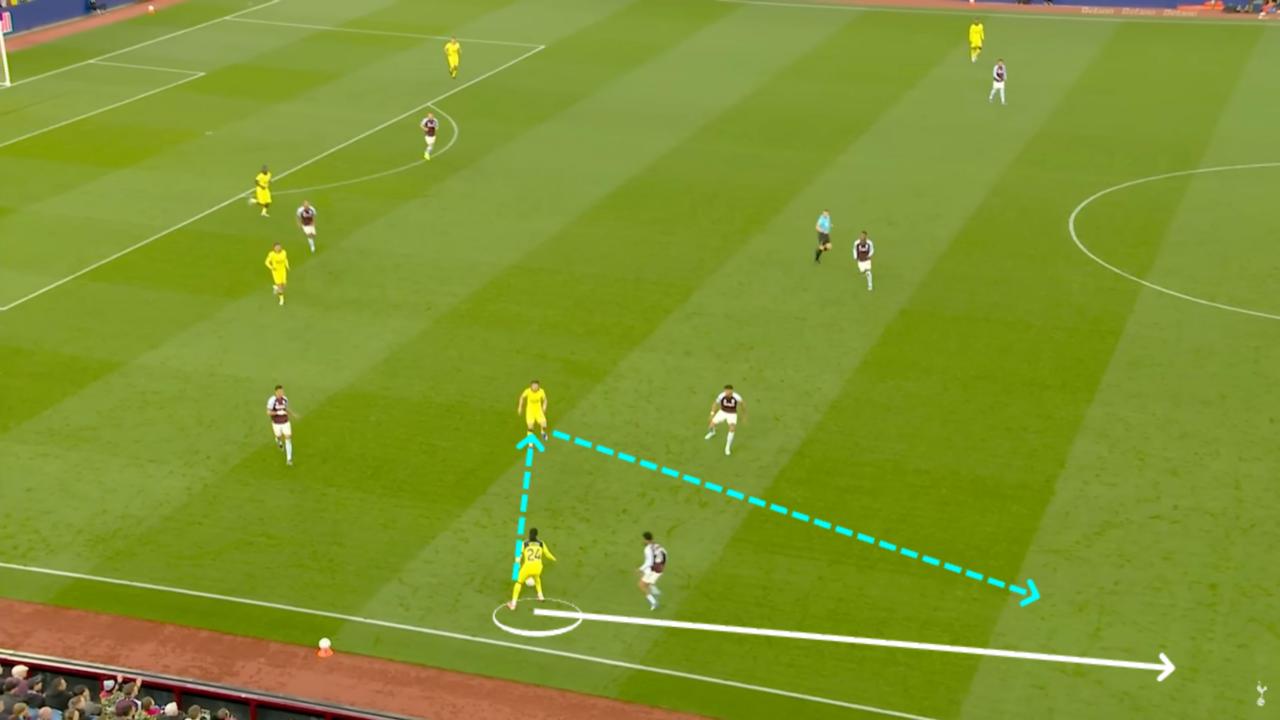
Danso finds Djed Spence, who was then filling the role of a touchline winger…
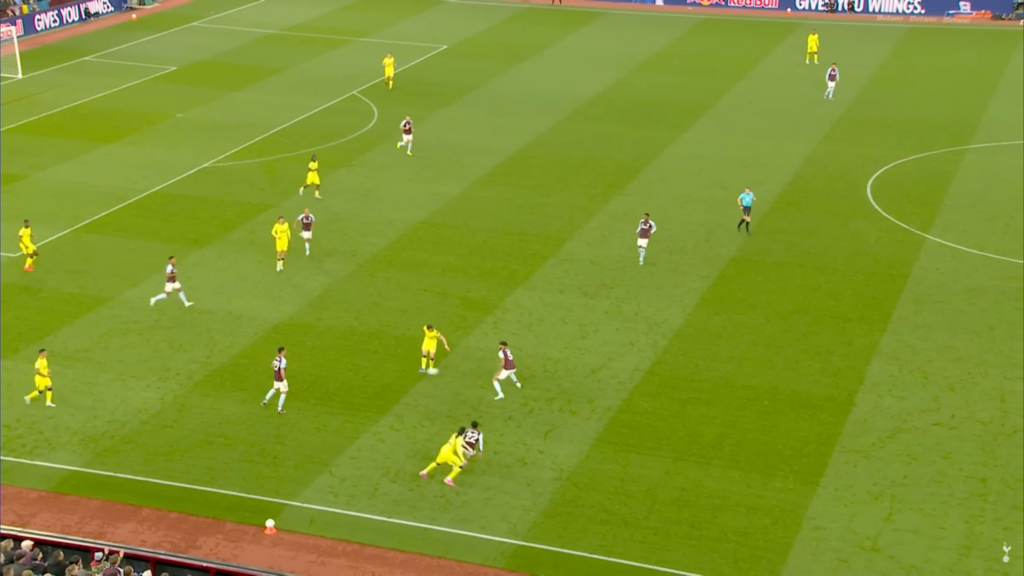
Spence is then able to combine with Conor Gallagher for a quick one-two pass…
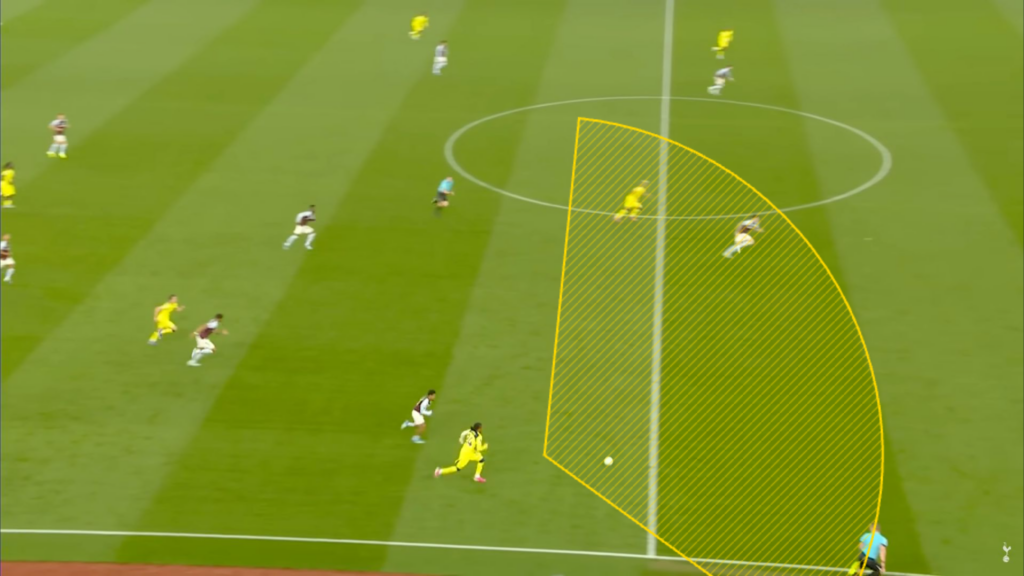
Which sends the fullback running into acres of space behind the Villa defensive line.
Although Spurs didn’t score following that passage of play, they nonetheless created a dangerous opportunity which led to a shot that just narrowly missed the target.
The objective behind De Zerbi’s tactical set up, is to create as many of these kinds of opportunities as possible per game.
What problem is Savinho supposed to solve at Spurs?
The arrival of a winger like Savinho, is meant to strengthen this very last phase of play in the Tottenham buildup.
During the closing stages of the season, Spurs found themselves with no attacking alternatives to the frontline of Mathys Tel, Randal Kolo Muani and Richarlison. At some point, Kolo Muani’s dreadful performances even forced De Zerbi to utilise Djed Spence, a defensive fullback, as a right-winger, as we saw in the Aston Villa game.
Let’s take a look at the kind of situations in which Savinho thrives -an example from Manchester City’s last game of the season, coincidentally, also against Aston Villa.
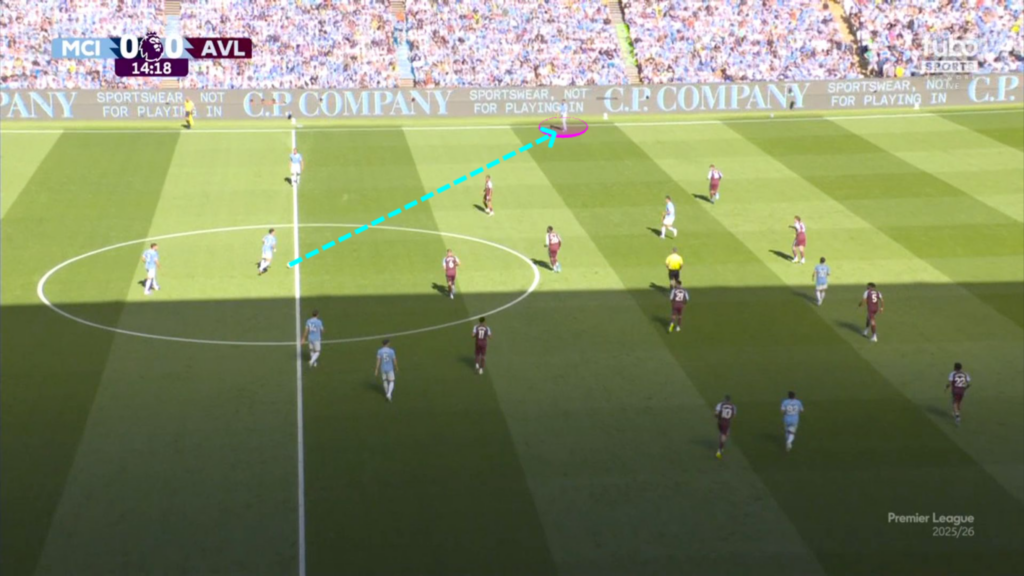
Here, City find themselves in settled possession and Villa dropping deep to deny central space. This does create space on the flanks however, and Phil Foden spots Savinho who’s hugging the touchline.
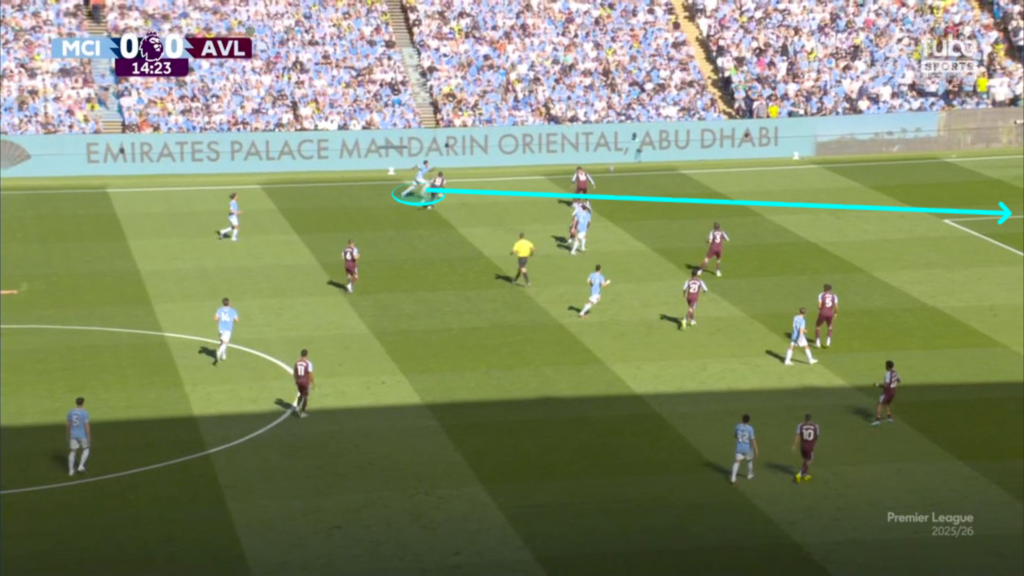
Savinho’s first instinct when receiving a pass from central spaces, is to go on attacking runs down the touchline and at his fullback.
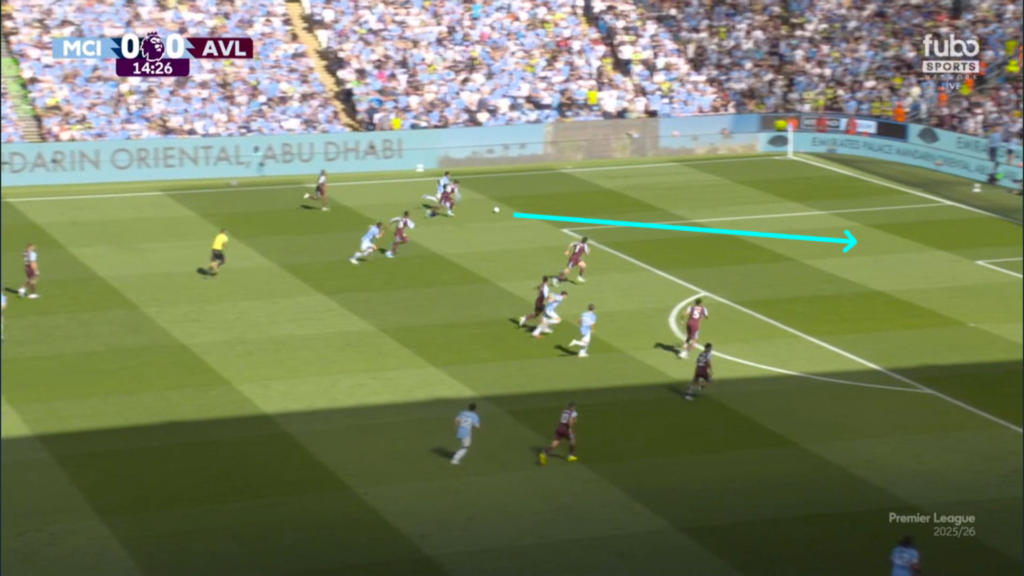
He’s able to take the ball down, gets on his bike and starts running down the touchline.
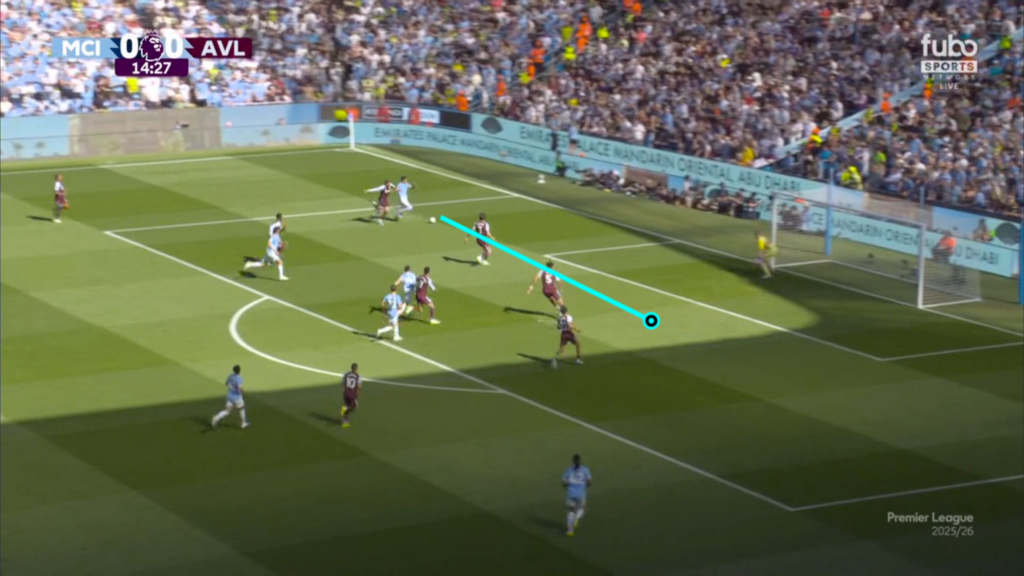
His pace, as well as a great touch to take the ball past the defender, allow him to continue his run into the box, where Savinho looks to create a chance for a teammate by crossing the ball centrally for someone to run onto.
This situation uses Savinho’s best qualities, but perhaps more importantly, Savinho can create these situations for himself consistently during a game.
He will occupy the wide spaces in an attempt to stretch play for easier passing channels, and, once he receives the ball wide, he’ll look to run down the wing to try and get a cross in.
That’s also what his statistics indicate. Savio is amongst the highest percentiles when it comes to dribbling, carrying the ball, crossing and creating goalscoring opportunities for his teammates.
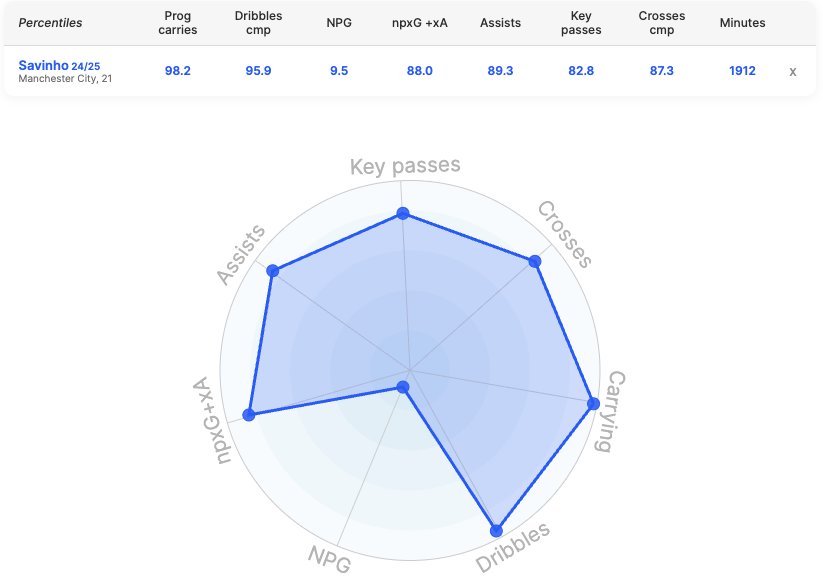
Savinho not only raises the technical floor of the team, but some of his biggest qualities are his exceptional first touch, incredible dribbling, and crossing ability. This makes Savinho almost the ideal profile for a Roberto De Zerbi-type winger.
If one puts Savinho instead of Djed Spence, in the exact scenario that we discussed earlier, it’s easy to imagine that a player like Savinho could, thanks to his qualities, create more of a dangerous situation than Spence was able to.
So, what does Savinho mean for the way Tottenham will play as a collective?
Now that we understand the kind of player Savinho is as well as the role he’d play for Roberto De Zerbi, we can start thinking about what his inclusion in the team will mean for Tottenham’s larger attacking structure.
Here, we imagine a hypothetical scenario of a Spurs attack with Savinho on the pitch.
Focusing on the front three players and James Maddison playing as the most advanced midfielder, let’s put Tottenham in a scenario where they want to attack a team defending in a very common out-of-possession 4-4-2 formation.
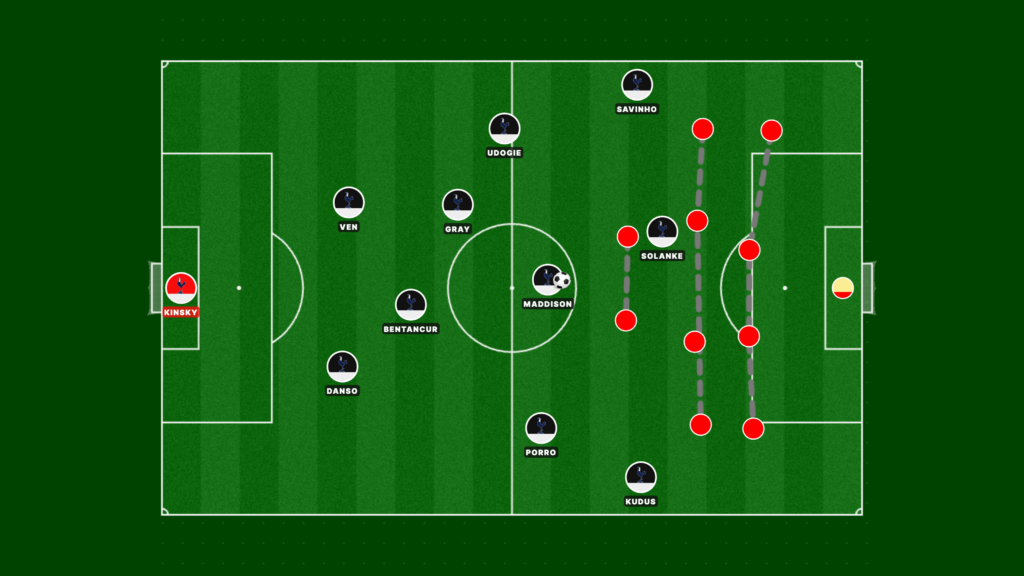
In this scenario, Maddison finds Savinho, who occupies the wide-left space. Savinho’s primary objective in this situation is to try and beat his fullback, get to the goal-line, and put in a cross through the middle for an arriving forward, in this case Solanke.
Savinho’s abilities, his dribbling and acceleration, mean that he’s likely to beat his defender and put that dangerous ball into the box.
We see that this hypothetical chance, which Savinho created for Tottenham just now, is almost a carbon copy of the earlier chance he created for Manchester City.
We can again go back to Savinho’s crossing situation and see that none of City’s forwards are anticipating a cross.
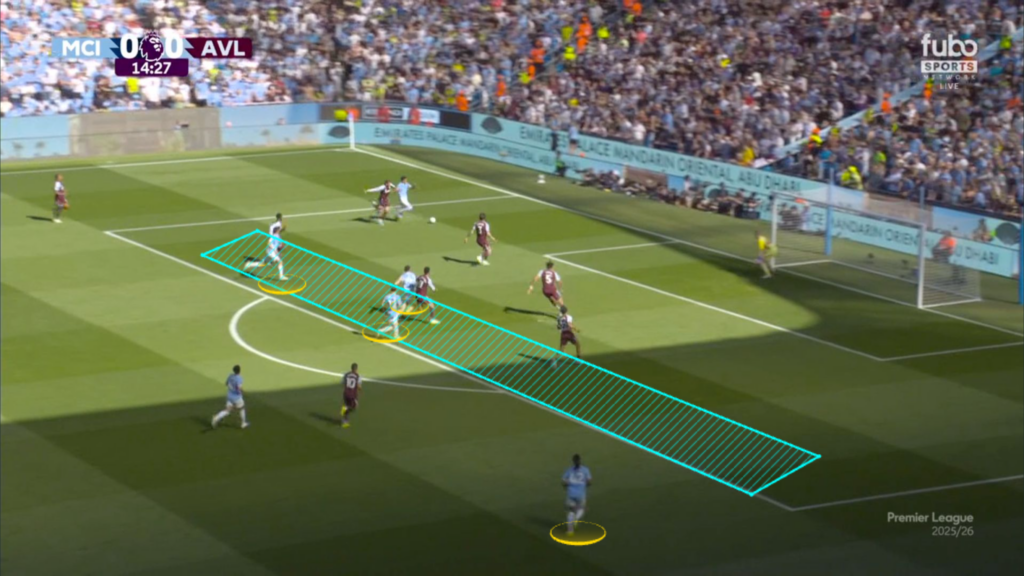
With Haaland not in City’s lineup and Guardiola choosing to play Tijani Reijnders and Foden as a double false 9 in a 4-2-2-2 formation, there is no one with the ruthlessness and a pure striker’s instinct to occupy the central space in waiting for a cross.
Four city players are instead occupying the space on the edge of the box, and with no one to cross too, Savinho is forced to smash the ball against his defender to at least win a corner.
This actually says a lot about the kind of player, a striker, Savinho must be paired with to be the most successful. Being relative
And the problem with Dominic Solanke as the main striker for Tottenham is that he is simply not accustomed to taking up these goalscoring positions, being more likely to take up various positions around the pitch and on the edge of the box.
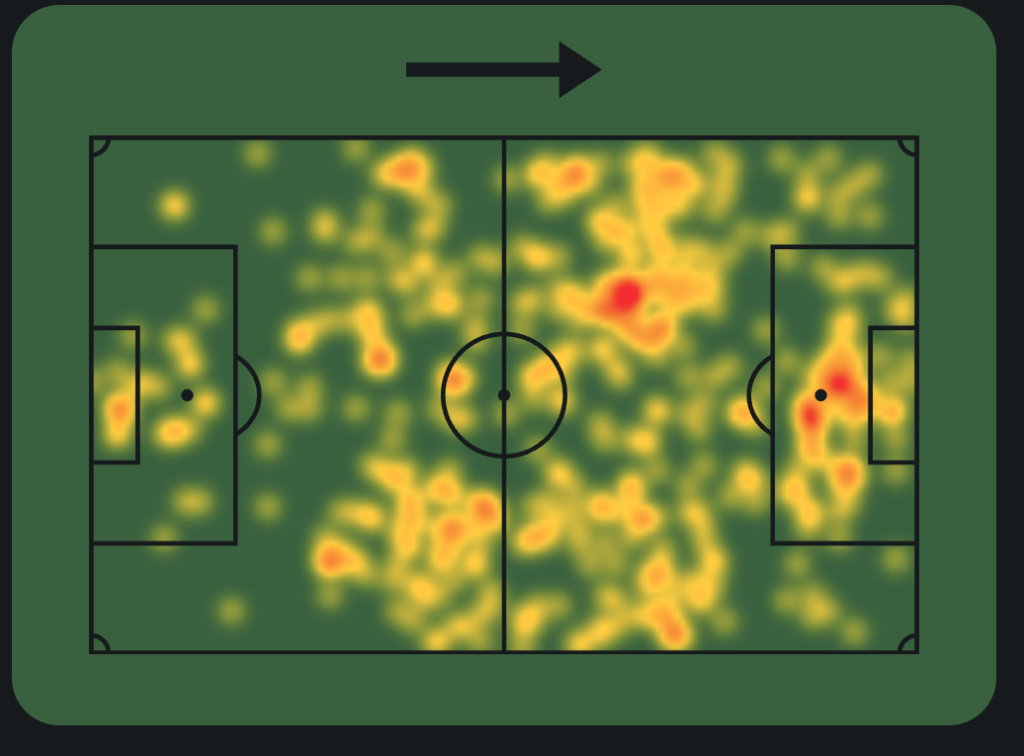
Solanke is a creative and technical striker who excels in link-up play but lacks the ‘killer instinct’ to consistently crash the box and get on the end of chances created by his teammates.
This misalignment in striker profiles can be a serious snag for De Zerbi, especially given that Mohammed Kudus is Spurs’ other option on the wing.
To simplify things somewhat, Kudus is actually a very similar profile to Savinho. Both of these players want to keep driving towards the goal-line and put a dangerous ball into the middle of the box.
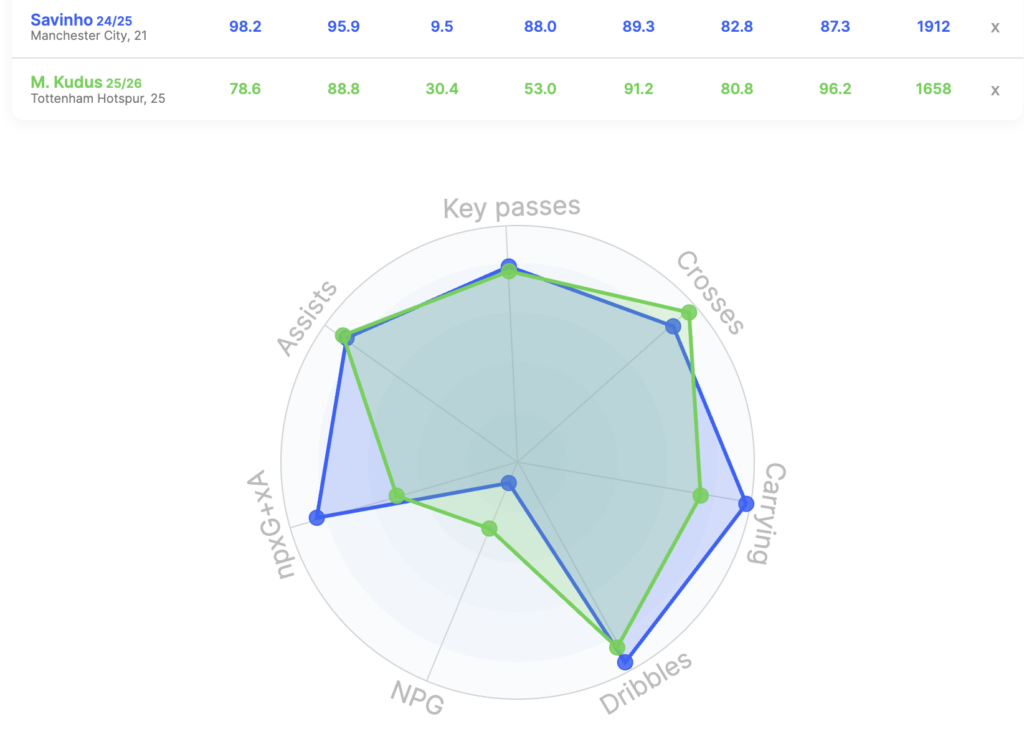
Neither of them are prolific goalscorers or are particularly proficient when cutting inside to shoot on goal (think Mathys Tel’s stunner against Leeds United).
In that sense, both Kudus and Savinho can be described as “one-trick ponies,” being incredibly efficient in what they want to do but not offering much more flexibility beyond that.
This flaw in their play becomes almost unavoidable when there is no one in their teams to capitalise on the chances they create.
The obvious solution for Tottenham and De Zerbi is to bring in an alternate striker option, one that is more comfortable working as a pure poacher and finisher.
Regardless, even with all of these questions in mind, if the deal for Savinho goes through. Spurs will strengthen their squad with an incredibly talented, technical, and creative player. Savinho’s young age means that he could still develop his game with good coaching, and there is no doubt that its the correct signing for Spurs’ current needs.